Beroil Energy
Beroil Energy
Language
LanguageEnglish
Home
About
Products
Insights
Blog
Contact

Stay Connected with Beroil

Quick Link

HomeAboutProductsInsightsBlogContact

Contact Info

info@beroilenergy.com+44 744 913 9023

4-6 Middlesex St., E1 7JH, London, United Kingdom

BEROIL

Copyright © 2026 Beroil Energy Group. All Rights Reserved

  • Terms of Service
  • Privacy Policy
Chat on WhatsApp

Articles & Market Insights

HomeBlogProduct Science

Product Science

|

January 21, 2024 · 5 min read

Sodium Bicarbonate in Personal Care & Cosmetics: Acid-Mantle Balance and Gentle Exfoliation Limits

Beroil Trade Desk

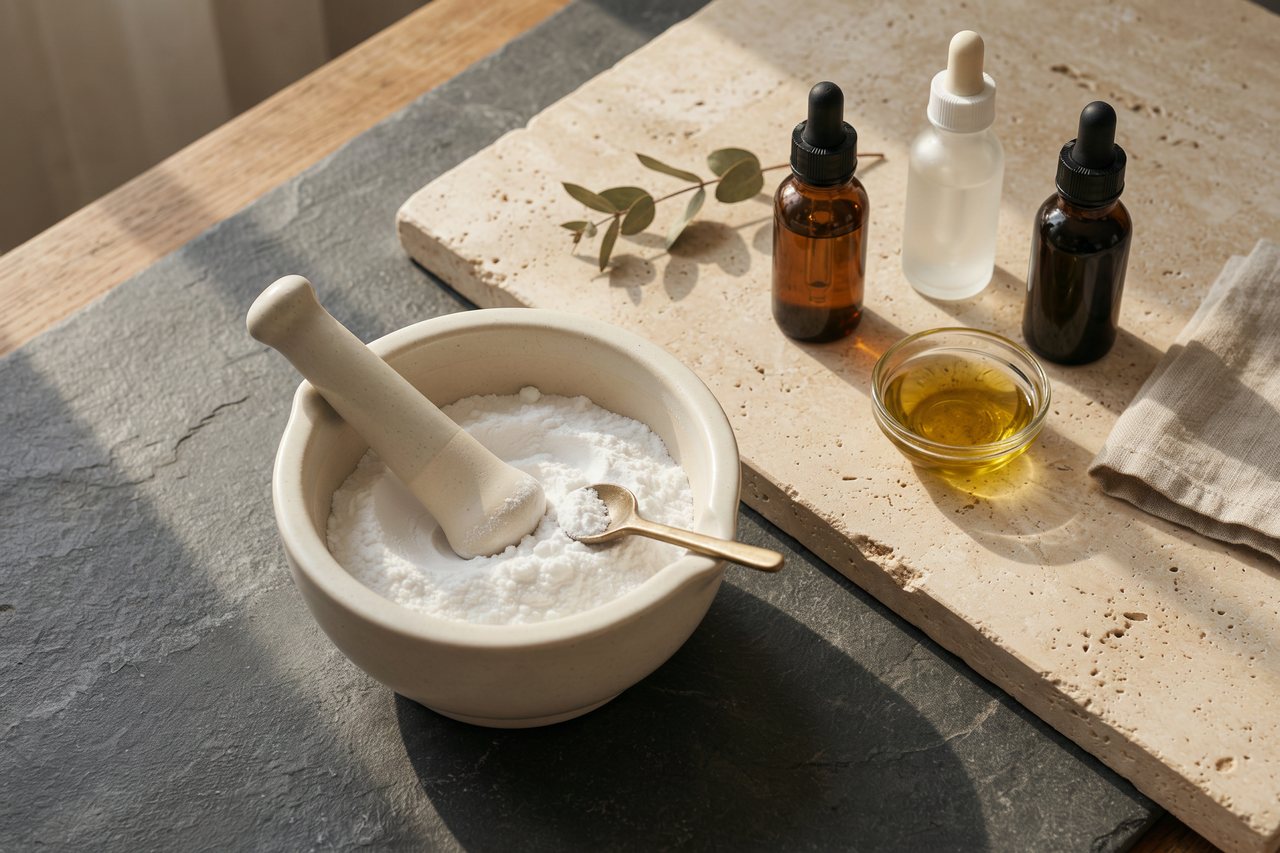
Cosmetic and oral care raw material grade testing for fine sodium bicarbonate

Personal-care formulators incorporate USP- and FCC-grade sodium bicarbonate into effervescent bath bombs, low-abrasion toothpastes, clarifying hair rinses, and aluminum-free deodorants. Yet because healthy human skin carries a protective acidic mantle (pH 4.5–5.5), understanding precise neutralization ratios—not raw DIY scrubbing—separates stable cosmetic products from barrier irritation.

Effervescent Bath Bombs, Oral Care, and Aluminum-Free Deodorants

The fastest-growing cosmetic application of NaHCO3 is effervescent solid tablets and bath bombs, where fine sodium bicarbonate blends with anhydrous citric acid (1:2 to 2:1 stoichiometric tuning). Dry compression keeps both powders dormant until bathwater activates vigorous CO2 release that disperses botanical oils and skin softeners evenly.

In oral hygiene pastes, micro-fine crystal grades provide mild gentle polishing below enamel Mohs hardness while neutralizing plaque fatty acids and halitosis volatile sulfur compounds. Formulators purchasing bulk material insist on smooth fine mesh from our USP / Food Grade Purity Series with tight insoluble-matter and heavy-metal compliance.

Formulation Boundaries: Respecting the Skin Acid Mantle (pH 4.5–5.5)

Unbuffered saturated baking soda pastes sit around pH 8.3–8.5. Prolonged, repeated application directly onto bare facial skin or scalp cuticles can strip protective lipid ceramides and elevate stratum corneum pH, causing dryness or barrier sensitization.

Professional cosmetic chemists counter this reliably either by reacting bicarbonate completely inside citric-acid effervescent systems or by keeping dissolved leave-on bath concentrations mild (pH ~7.2–7.6) paired with soothing humectants and rinsing cleansers cleanly afterward.

3 Formulation Rules for Cosmetic & Oral Care Manufacturers

01.

Choose Low-Abrasion Fine Recrystallized Mesh

Smooth rounded fine crystals prevent micro-scratching on toothpaste enamel tests and eliminate gritty clumps in pressed bath tablets.

02.

Control Moisture Below 0.2% Prior to Citric Blending

Even trace ambient dampness triggers premature fizzing inside storage molds, ruining bath-bomb compression shelf life.

03.

Pair High-Alkali Systems With pH Recovery Rinses

After clarifying hair product buildup with alkaline rinses, mild acidic conditioners smoothly reseal hair keratin cuticles.

Cosmetic Raw Material Links

Review analytical specifications for cosmetic and personal care sourcing:
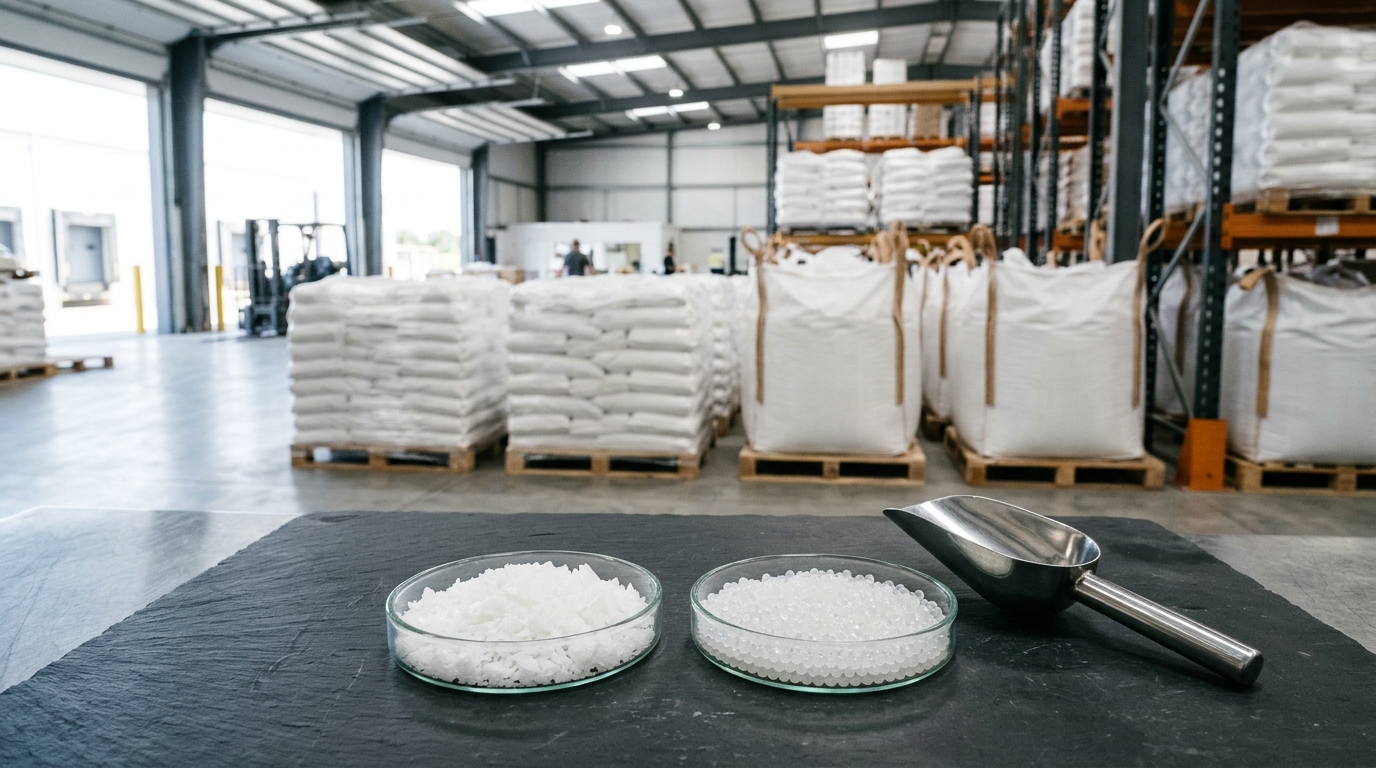
  • Fine USP / Food Grade Specs: Low lead/arsenic heavy metal certification with full batch COA.
  • Production Granulation Guide: How precipitation method controls fine crystal morphology.
  • Humidity Storage Standards: Protect citric-bicarbonate blends from pre-reaction humidity.
  • Request Cosmetic Supply Pricing: 25 kg hygiene-lined bags shipped globally FOB or CFR.

Related Specifications & Further Reading

  • Fine Mesh Food & USP Sodium Bicarbonate Specs
  • Moisture Control & Dry Packaging Standards

Beroil Trade Desk

Petrochemical & Technical Research

Category

Technical Research

05

Packaging & Logistics

02

Industrial Supply

10

Product Science

09

Global Markets

06

Latest Posts

Caustic Soda Flakes 99% vs. Pearls vs. 50% Liquid (NaOH): Specs, IMDG Class 8 & Export Import Guide

Industrial Supply

|

November 26, 2026

Caustic Soda Flakes 99% vs. Pearls vs. 50% Liquid (NaOH): Specs, IMDG Class 8 & Export Import Guide

Soda Ash Dense vs. Light (Na2CO3 99.2%): Specs, Export Packing, Moisture Control & B2B Import Guide

Industrial Supply

|

November 26, 2026

Soda Ash Dense vs. Light (Na2CO3 99.2%): Specs, Export Packing, Moisture Control & B2B Import Guide

Granular vs. Lump vs. Powder Sulfur: Industrial Uses, Technical Specs & Commercial Export Guide

Industrial Supply

|

November 22, 2026

Granular vs. Lump vs. Powder Sulfur: Industrial Uses, Technical Specs & Commercial Export Guide

Recent Posts

Practical chemical specifications, bulk packaging protocols, and commodity supply insights from Beroil Energy Group.

Polymer Modified Bitumen (PMB) & Bitumen Emulsions (CRS-2, CSS-1): Heavy-Axle & Cold Paving Engineering

Product Science

|

November 22, 2026

Polymer Modified Bitumen (PMB) & Bitumen Emulsions (CRS-2, CSS-1): Heavy-Axle & Cold Paving Engineering

How to Audit a Bitumen COA & SGS Report: ASTM D5, D36, Spot Test & B2B Export Procurement Checklist

Global Markets

|

November 22, 2026

How to Audit a Bitumen COA & SGS Report: ASTM D5, D36, Spot Test & B2B Export Procurement Checklist

Oxidized Bitumen 115/15 and 90/15: Softening Point Engineering for Waterproofing, Roofing & Pipe Coating

Industrial Supply

|

November 22, 2026

Oxidized Bitumen 115/15 and 90/15: Softening Point Engineering for Waterproofing, Roofing & Pipe Coating