
Articles & Market Insights
Product Science
November 22, 2026 · 10 min read
Polymer Modified Bitumen (PMB) & Bitumen Emulsions (CRS-2, CSS-1): Heavy-Axle & Cold Paving Engineering
Beroil Trade Desk

As port access highways, desert expressways, and international airport runways absorb heavier axle loads and wider diurnal temperature swings, conventional straight-run binders encounter physical performance ceilings. Engineers split specialized binder demand into two distinct technologies: hot-applied Polymer Modified Bitumen (PMB) engineered with elastomeric SBS cross-linking to resist permanent rutting, and ambient-temperature Cationic Bitumen Emulsions (CRS-2, CMS-2, CSS-1) formulated for rapid chip sealing, tack coats, and zero-solvent cold-mix maintenance.
1. Beyond Virgin Penetration Binders: Why Heavy Corridors Need Elastomeric PMB Networks
While virgin binders covered in our Bitumen 60/70 vs. VG30 and VG40 comparison handle standard arterial highways reliably, unmodified asphalt behaves largely as a viscoelastic fluid under slow, channelized truck loads above 55°C. At highway toll booths, climbing lanes, and airport braking zones, accumulated shear deformation rapidly develops deep longitudinal ruts.
At the opposite thermal extreme—high-altitude passes or continental steppe winters dropping below -15°C—simply selecting a harder straight-run grade such as 40/50 or VG40 solves high-temperature shoving only by turning the wearing course dangerously brittle against thermal contraction cracking.
Introducing Polymer Modified Bitumen (PMB) solves this classical stiffness-versus-flexibility trade-off. By shearing 3.0% to 5.5% Styrene-Butadiene-Styrene (SBS) block copolymer into selected vacuum-bottom maltene-rich base bitumen, rigid polystyrene end-blocks anchor a rubbery polybutadiene matrix that rebounds elastically after every wheel pass.
2. SBS Polymer Modified Bitumen (PMB): Storage Stability, Elastic Recovery & Rutting Defense
In international exports structured under EN 14023 (such as PMB 25/55-60 and PMB 45/80-65), Indian IRC:SP:53 (PMB-40 and PMB-70), or Superpave Performance Grading (PG 76-22 and PG 82-22), elastic recovery under ASTM D6084 is the single clearest proof of genuine elastomeric modification. Properly cross-linked SBS PMB delivers 75% to 90%+ elastic recovery after stretching at 25°C alongside softening points elevated to 65°C–85°C.
Crucially for export projects, buyers must distinguish high-shear cross-linked PMB from cheaply dispersed wax or plastomer blends. While oxidized or EVA-modified binders can inflate ring-and-ball softening points artificially, they fail low-temperature force-ductility and phase-separation tests during hot tank holding.
Always verify EN 13399 / ASTM D7173 Storage Stability (Tube Test): after holding PMB vertically at 163°C–180°C for 48–72 hours without agitation, the softening point difference between top and bottom fractions must stay <= 2.5°C. Poorly compatibilized PMB separates into a polymer-rich skin and stiff base layer inside site storage tanks.
3. Cationic Bitumen Emulsions (CRS-2, CMS-2, CSS-1): Water-Phase Breaking Mechanics
Unlike PMB—which must be mixed and compacted hot at 165°C–180°C—bitumen emulsions suspend microscopic 1–10 micron bitumen droplets inside an acidified water phase using specialized cationic amine surfactants (57%–67% residual bitumen under ASTM D2397). Positively charged droplets remain stable inside transit drums until contacting negatively charged silicate or dusty road aggregates.
Choosing between Rapid Setting (CRS-1 / CRS-2), Medium Setting (CMS-2), and Slow Setting (CSS-1 / CSS-1h) depends on breaking speed versus aggregate fines content. CRS-2 breaks within minutes upon touching clean crushed chippings for high-speed surface dressing, whereas CSS-1 tolerates dusty dense-graded bases and acts as an ultra-uniform tack coat or cold-mix slurry binder—offering a water-based alternative where kerosene-diluted MC-30 or MC-70 cutbacks face environmental VOC restrictions.
Field failure with emulsions almost always stems from pH or particle-charge mismatch against local quarry stone. Limestone (calcareous, alkaline surface) reacts slowly with standard cationic emulsions unless upgraded with adhesion-promoting emulsifiers or checked via trial mix coating before full vessel mobilization.
4. PMB vs. Cutback vs. Emulsion Selection Across Airports, Chip Seals & Tack Coats
Each specialty bitumen class maps to a distinct civil-engineering layer. Structural wearing courses on expressways and runways demand hot SBS PMB or heavy VG40; surface dressing and urban pothole cold patching favor CRS-2 / CMS-2 emulsions; damp granular sub-base priming uses MC-30 cutback or penetrating CSS-1; and vertical waterproofing membranes or buried pipeline enamels call for blown Oxidized Bitumen 115/15 and 90/15.
For tropical and subtropical chip-seal highways, Polymer Modified Emulsions (CRS-2P) bridge both worlds: cold distributor spraying at 60°C–80°C with zero solvent fire hazard, followed by an elastomeric rubberized seal coat that holds aggregate chippings firmly under fast braking traffic.
5. Export Shelf-Life, Agitation Protocols & Pre-Shipment Testing for Modified Binders
Export logistics differ sharply between hot-decant PMB and aqueous emulsions. Cross-linked SBS PMB ships solid at ambient temperature in new heavy-gauge 180 kg steel drums, silicone-lined jumbo bitubags, or heated ISO tank containers detailed in our Bitumen Export Packaging Guide. Emulsions (CRS-2 / CSS-1) remain liquid and must travel exclusively in tight-head epoxy-lined steel drums or IBC totes, strictly protected from sub-zero freezing temperatures that permanently break the oil-in-water dispersion.
Before shipping modified binders, lock elastic recovery (ASTM D6084), dynamic shear (G*/sin delta), or Saybolt Furol viscosity and residue-by-distillation (ASTM D2397) tolerances alongside an independent SGS survey outlined in our Bitumen COA & SGS Procurement Audit Checklist. Browse our complete petrochemical supply portfolio or reach our export quotation desk for batch datasheets and FOB / CFR pricing.
Technical Spec Matrix: PMB (SBS) vs. Cationic Emulsions (CRS-2 / CSS-1)
01.
SBS PMB Elastic Recovery & High-Temp Defense
3%–5.5% cross-linked SBS raises Ring & Ball Softening Point to 65°C–85°C with >= 75% ASTM D6084 elastic recovery, preventing heavy-axle rutting on airport runways and toll corridors.
02.
EN 13399 / ASTM D7173 Storage Stability
Genuine compatibilized PMB shows <= 2.5°C top-to-bottom softening-point divergence after 72 h at 163°C–180°C, proving polymer will not phase-separate inside asphalt plant tanks.
03.
CRS-2 vs. CSS-1 Emulsion Break Rates
CRS-2 (65%+ bitumen) breaks rapidly upon contact with clean chippings for surface dressing, while CSS-1 / CSS-1h (57%+ bitumen) remains stable long enough for tack coats, dense fines, and cold patching.
04.
Emulsion Logistics & Freeze Protection
Emulsions ship liquid in epoxy-lined tight-head steel drums or IBC totes and must never drop below 0°C during transit or storage, whereas drummed SBS PMB ships solid and melts cleanly at 165°C–180°C.
05.
Mixing & Distributor Spray Windows
Hot-mix SBS PMB requires 165°C–180°C pugmill coating and prompt roller compaction above 140°C; cationic emulsions spray safely at 50°C–80°C with zero flammable kerosene vapors.
PMB & Emulsion Export Specifications & Technical Links
Explore Beroil Energy modified binder specifications and related highway engineering guides:
- SBS PMB & Cationic Emulsion Datasheets: Export grades covering EN 14023 PMB, PG 76-22, CRS-1/CRS-2, CMS-2, and CSS-1h with full SGS test reports.
- Cutback MC-30 vs. MC-70 Prime Coat Guide: Compare solvent-based sub-base penetration against water-based CSS-1 emulsions.
- Bitumen 60/70 vs. VG30 & VG40 Highway Specs: Evaluate when unmodified VG40 suffices versus stepping up to cross-linked SBS PMB.
- Bitumen COA & SGS Verification Checklist: Audit ASTM D6084, AASHTO T102 spot test, and ASTM D2397 residue specs before L/C settlement.
- Request PMB or Emulsion Export Quote: Confirm grade, drum/IBC packaging, and CFR destination terms with our trade engineering team.
Frequently Asked Questions
What is the main advantage of SBS Polymer Modified Bitumen over standard 60/70 or VG30?
SBS copolymer builds a three-dimensional elastic network inside the bitumen matrix, raising high-temperature rutting resistance (softening points 65°C–85°C) while retaining low-temperature flexibility so heavy-axle pavements resist both summer shoving and winter cracking.
What is the difference between CRS-2 and CSS-1 bitumen emulsions?
CRS-2 is a high-viscosity, Rapid-Setting cationic emulsion (~65%+ residual bitumen) engineered to break quickly upon contact with aggregate chippings in surface dressing/chip seals. CSS-1 is a Slow-Setting grade (~57%+ bitumen) stabilized for tack coats, dense cold mixes, and high-fines soil stabilization.
How long can SBS PMB be stored hot before paving?
Cross-linked PMB holds stability best under continuous gentle mechanical agitation at 160°C–175°C and should ideally be used within 3 to 5 days of reheating; prolonged unagitated holding above 180°C degrades polymer chains.
Why must bitumen emulsions never freeze during sea freight or storage?
Because bitumen emulsions consist of microscopic bitumen droplets suspended in water (~35–43% water phase), freezing expands ice crystals that crush the protective surfactant film and permanently coagulate the bitumen into unusable lumps.
Can Beroil Energy supply both drummed PMB and epoxy-lined drummed emulsions for export?
Yes. We supply solid SBS PMB in heavy-duty steel drums or bitubags alongside liquid CRS-2, CMS-2, and CSS-1 cationic emulsions in UN-certified epoxy-lined drums or IBC totes with third-party SGS inspection.
Related Specifications & Further Reading
Category
Latest Posts
Industrial Supply
November 22, 2026
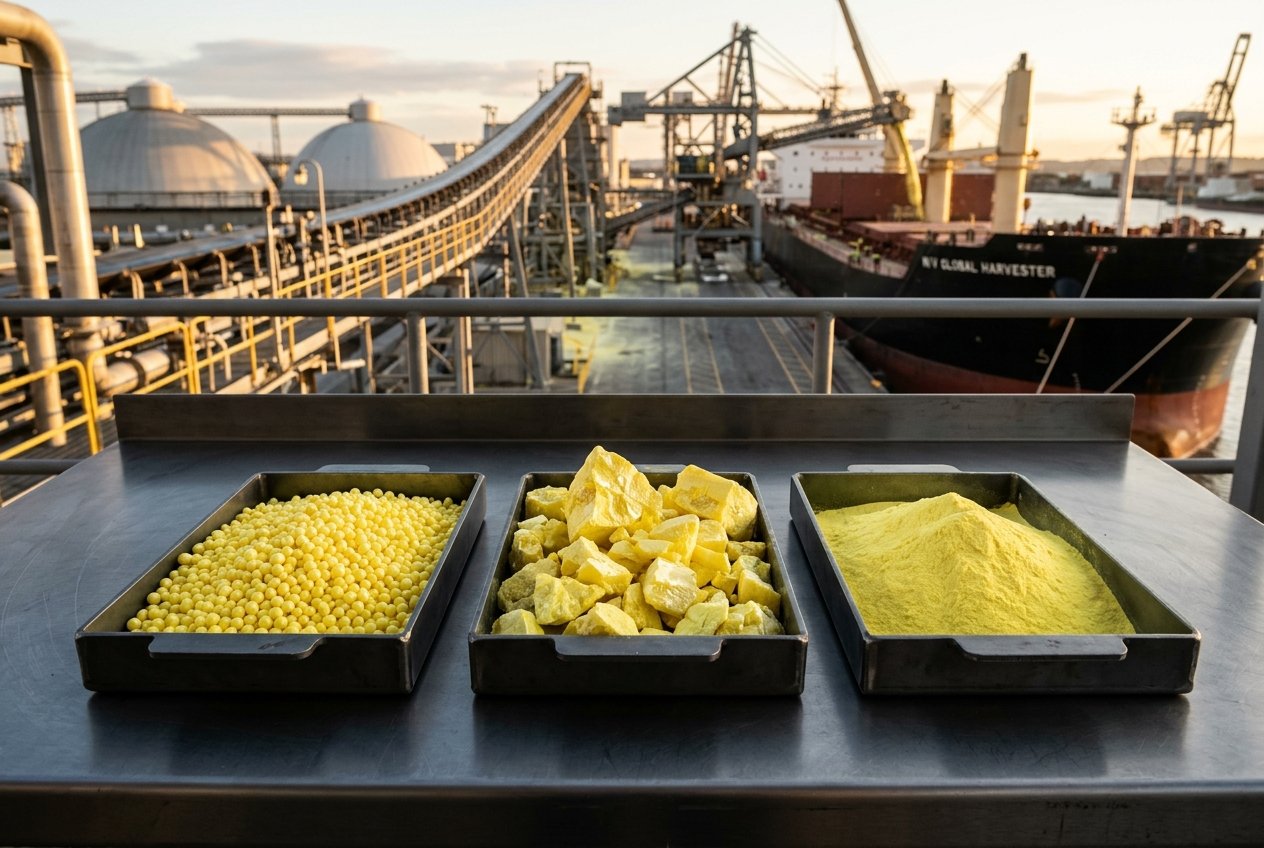
Granular vs. Lump vs. Powder Sulfur: Industrial Uses, Technical Specs & Commercial Export Guide

Global Markets
November 22, 2026
How to Audit a Bitumen COA & SGS Report: ASTM D5, D36, Spot Test & B2B Export Procurement Checklist
Industrial Supply
November 22, 2026
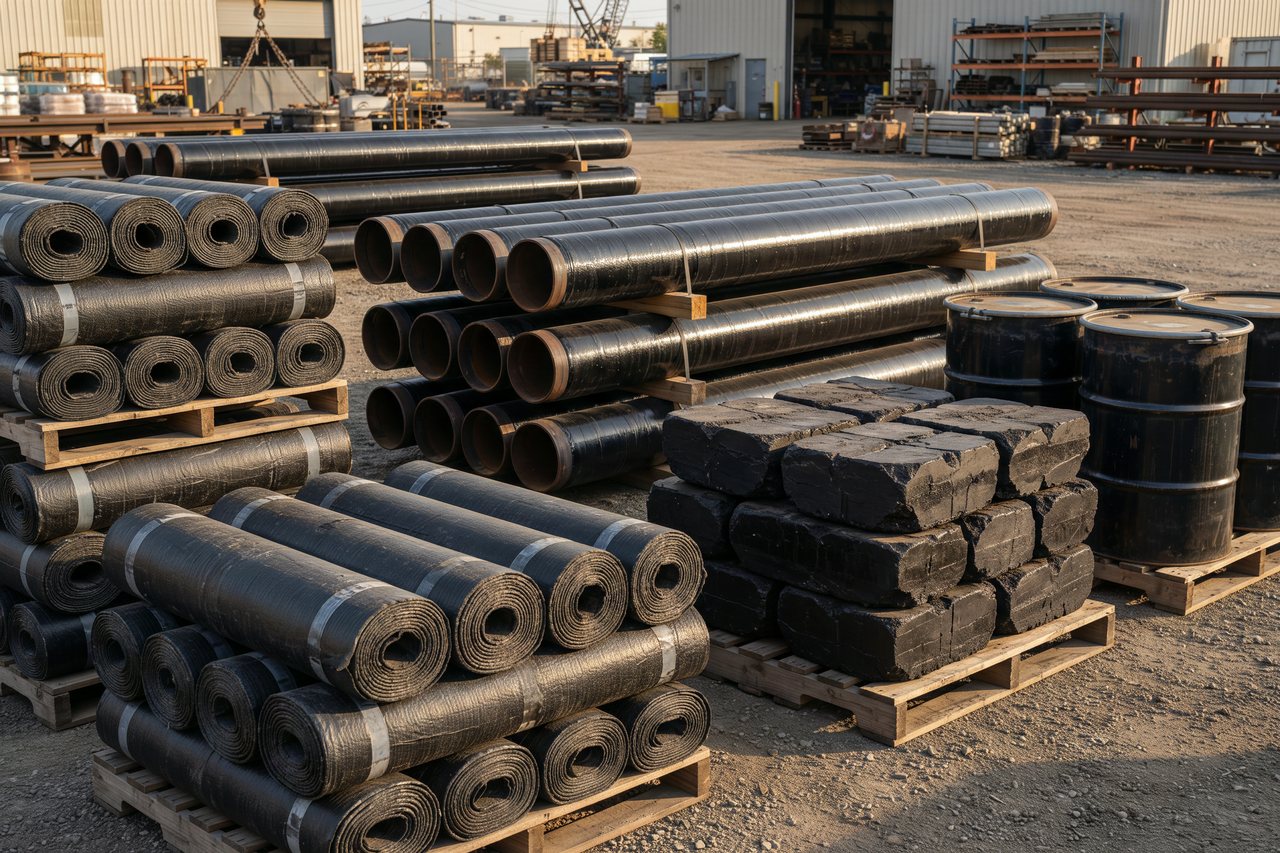
Oxidized Bitumen 115/15 and 90/15: Softening Point Engineering for Waterproofing, Roofing & Pipe Coating
Recent Posts
Practical chemical specifications, bulk packaging protocols, and commodity supply insights from Beroil Energy Group.
Technical Research
November 22, 2026
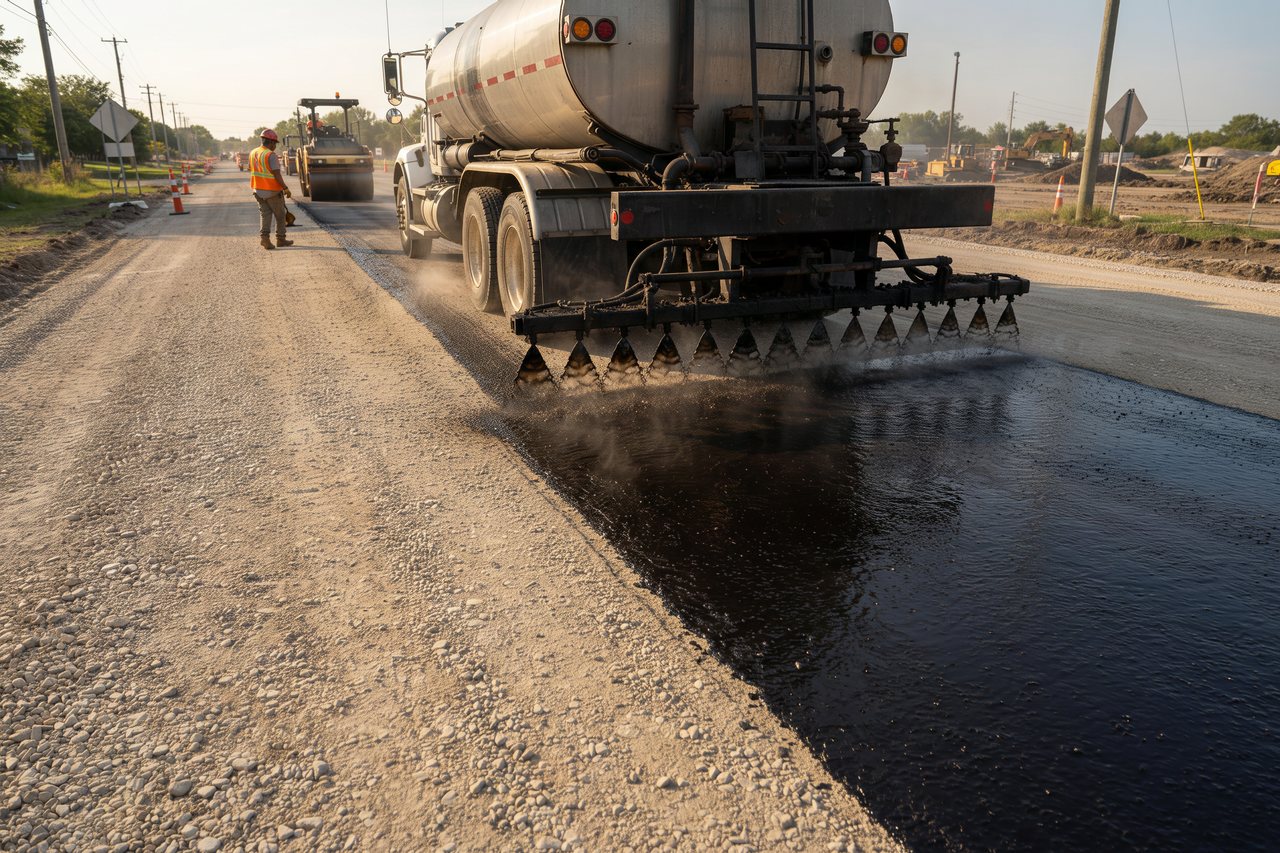
Cutback Bitumen MC-30 vs. MC-70: Prime Coat Selection, Curing Rates, and Sub-Base Penetration

Technical Research
November 22, 2026
Bitumen 60/70 vs. VG30 and VG40: Penetration vs. Viscosity Grading for Export Highway Projects

Packaging & Logistics
November 22, 2026