
Articles & Market Insights
Global Markets
November 22, 2026 · 11 min read
How to Audit a Bitumen COA & SGS Report: ASTM D5, D36, Spot Test & B2B Export Procurement Checklist
Beroil Trade Desk

Cross-border bitumen procurement breaks down more often over unverified Certificate of Analysis (COA) numbers and swapped load-port samples than over vessel schedules. Because recycled engine bottoms, oxidized cutbacks, and cracked visbreaker tar can temporarily mimic fresh virgin binder in basic visual checks, disciplined importers audit every refinery COA line by line alongside independent SGS, Intertek, or Bureau Veritas sampling prior to vessel release.
1. Why Bitumen Imports Fail Port Clearance: The Gap Between Proforma Claims and Kettle Chemistry
When road contractors tender virgin Penetration 60/70, 40/50, or Viscosity Grade VG30 bitumen, dishonest brokers occasionally blend low-value visbreaker residue, vacuum-distilled slack wax, or light gas-oil cutters to hit an attractive FOB price. Although freshly poured drums may appear glossy and black at loading, field failure begins inside the asphalt plant within weeks.
Excessive volatile cutter fractions vaporize in the drum mixer, producing hazardous blue smoke and sudden mixture stiffening, while paraffinic wax and cracked asphaltenes destabilize aggregate adhesion under the first monsoon rain.
For importers navigating both ASTM D946 and IS 73 frameworks—analyzed in our Bitumen 60/70 vs. VG30 and VG40 Technical Guide—protecting project capital starts by demanding batch-traceable testing rather than generic brochure specifications.
2. Auditing the Core Four Lab Lines: Penetration (D5), Softening Point (D36), Ductility (D113) & Flash Point (D92)
Start every COA review with ASTM D5 Penetration at 25°C (60–70 dmm for standard 60/70) paired with ASTM D36 Ring-and-Ball Softening Point (typically 49–56°C for virgin Gulf-origin 60/70). A Penetration Index (PI) calculated from these two numbers outside -1.5 to +1.0 signals either over-oxidized feedstock or paraffin-rich crude that turns brittle in winter and soft in summer.
Next inspect ASTM D113 Ductility at 25°C (100 cm minimum for virgin paving grades) and ASTM D92 Cleveland Open Cup Flash Point (>= 230°C–250°C). A depressed flash point below 220°C on a supposed hot-paving grade is almost always proof of residual kerosene, diesel, or waste-oil dilution designed to lower apparent viscosity.
Specific Gravity at 25/25°C (ASTM D70) must sit tightly within 1.01 to 1.06 g/cm3. Readings below 1.00 point toward light hydrocarbon dilution or air entrainment, while anomalous readings above 1.07 warrant immediate checks for heavy mineral filler or coke fines.
3. Detecting Cracked or Adulterated Binder: AASHTO T102 Spot Test, TCE Solubility & RTFO Loss
Three chemistry-screening lines separate genuine vacuum-distilled paving bitumen from visbreaker tar or contaminated re-refined residues. First is the AASHTO T102 Spot Test using Standard Naphtha or Xylene-Naphtha solvent blends: a clear uniform ring ("Negative") proves homogeneous maltene-asphaltene peptization, whereas a dark central spot ("Positive") exposes thermally cracked, overheated, or incompatible feedstock.
Second, ASTM D2042 Solubility in Trichloroethylene must achieve >= 99.0%–99.5% by weight. Any insoluble balance indicates free carbon, coke particulates, catalyst fines, or soil/ash contamination. Third, Thin-Film Oven Test (ASTM D1754) or RTFO aging limits mass loss to <= 0.2%–0.5% and retained penetration above 54%–60%, preventing premature brittleness—an evaluation equally vital when benchmarking virgin binders against blown Oxidized Bitumen 115/15 and 90/15.
Beware of COAs carrying identical round numbers across multiple consecutive batches (for example exact 65.0 penetration and 50.0 softening point on three ships in a row)—a classic hallmark of recycled PDF certificates rather than live instrument printouts.
4. Packaging Weight Audits, Drum Gauge Verification & Container Seal Photography
Laboratory purity still suffers commercial loss if net cargo weights fall short at discharge. Whether importing 1 MT meltable jumbo bags, 180 kg steel drums, or heated ISO Bitutainers, require your inspection agency to witness tare-versus-gross weighbridge slips across randomized pallets or drums—confirming typical net weight tolerances (+/- 2–3%) and checking 0.6 mm+ new steel drum sheet gauge against dent-prone thin recycled drums.
For IMDG Class 3 hazardous cargoes such as Cutback Bitumen MC-30 and MC-70, inspectors must also verify UN-embossed drum markings, flash-point placards, bung-cap gasket tightness, and container door-seal serial numbers photographed immediately before vessel gate-in.
5. Structuring Air-Tight L/C Payment Terms & SGS Load-Port Protocols
When issuing an Irrevocable Letter of Credit (L/C) or staged T/T milestone, specify in Field 46A that payment releases only against an original Certificate of Quality and Quantity issued directly by SGS, Intertek, or Bureau Veritas—referencing composite samples drawn at the filling manifold and final container stuffing, not seller-submitted sample bottles. The same strictness applies to specialty SBS Polymer Modified Bitumen and Cationic Emulsions.
Retain one sealed referee counter-sample at the load port for 90 days in case of destination port customs disputes. Explore our multi-commodity petrochemical product catalog—including export granular and bright yellow sulfur—or connect directly with our compliance and documentation desk via the trade quotation portal for verifiable refinery batch COAs.
Five-Step SGS & COA Verification Protocol Before Final Vessel Settlement
01.
1. Authenticate Lab Accreditation & Batch Serial
Verify QR/online report registry with SGS, Intertek, or Bureau Veritas and confirm drum batch stencils or tank numbers match the Proforma Invoice lot ID.
02.
2. Cross-Check Penetration, Softening & Flash Point
Confirm Penetration Index sits within -1.5 to +1.0 and Flash Point exceeds >= 230°C (COC) on paving grades to rule out kerosene or waste-oil adulteration.
03.
3. Demand Spot Test & TCE Solubility Proof
Mandate AASHTO T102 Negative Spot Test and >= 99.0%–99.5% Solubility in Trichloroethylene (ASTM D2042) to exclude thermally cracked visbreaker bottoms.
04.
4. Audit Net Weight & Drum Condition During Stuffing
Instruct surveyors to weigh at least 5%–10% of drums/bitubags randomly on calibrated scales and photograph container numbers paired with high-security bolt seals.
05.
5. Lock Manifold Sampling & Counter-Samples in the L/C
Specify surveyor-drawn composite manifold/drum sampling plus a 90-day sealed referee counter-sample directly inside Letter of Credit documentary conditions.
Bitumen COA Audit Resources & Procurement Links
Use these Beroil Energy resources to standardize technical tenders and export QA:
- Verified Bitumen Grade Datasheets & Specs: Review full ASTM D946, IS 73, cutback, oxidized, and PMB specification tables before tendering.
- Bitumen 60/70 vs. VG30 & VG40 Technical Guide: Align 25°C penetration and 60°C viscosity test requirements in your proforma invoice.
- Bitumen Export Packaging Guide: Compare weight tolerances, decanting efficiency, and stuffing counts across bags, drums, and ISO tanks.
- Polymer Modified Bitumen & Emulsions Guide: Inspect extra QA metrics (ASTM D6084 elastic recovery & EN 13399 storage stability) for PMB and CRS-2.
- Request Sample COA & SGS Documentation: Submit destination port, target standard, and volume for verified export documentation and pricing.
Frequently Asked Questions
Which laboratory tests catch adulterated or visbreaker-blended bitumen?
A Positive AASHTO T102 Spot Test (with standard naphtha), TCE solubility below 99.0% (ASTM D2042), abnormally low COC flash point (< 220°C), and severe TFOT/RTFO aging hardening expose cracked residues, free carbon, or cutter-stock adulteration.
Is a supplier’s internal refinery COA enough without third-party SGS inspection?
No. For international sea shipments, buyers should mandate independent load-port inspection by SGS, Intertek, or Bureau Veritas where surveyors draw their own composite samples directly from the filling manifold or packed containers rather than testing seller-provided bottles.
Why does Specific Gravity matter on a Bitumen COA?
Virgin paving bitumen cleanly sits between 1.01 and 1.06 g/cm3 at 25°C under ASTM D70. Lower gravity signals air entrapment or light fuel dilution, while values above 1.07 suggest heavy coke fines or mineral contamination.
What is a healthy Penetration Index (PI) for paving bitumen?
Most highway specifications target a Penetration Index between -1.5 and +1.0 (typically around -1.0 to +0.5 for balanced Middle Eastern vacuum residues), ensuring the binder resists both high-temperature rutting and cold-weather cracking.
How does Beroil Energy guarantee COA transparency on export shipments?
Every Beroil Energy bitumen vessel or container lot ships with third-party SGS/Intertek verification tied directly to stamped batch serial numbers, weighbridge slips, high-security container bolt seals, and retained load-port referee counter-samples.
Category
Latest Posts
Industrial Supply
November 22, 2026
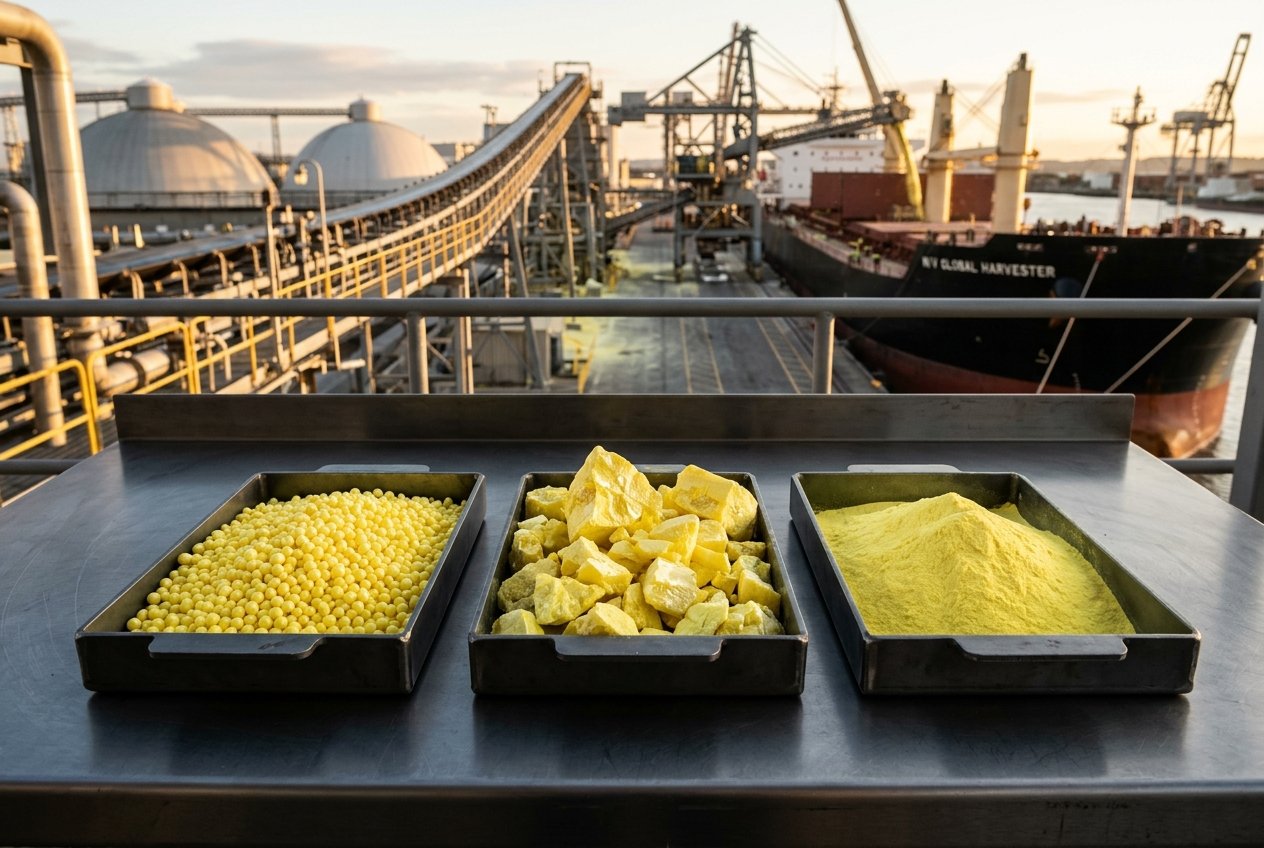
Granular vs. Lump vs. Powder Sulfur: Industrial Uses, Technical Specs & Commercial Export Guide

Product Science
November 22, 2026
Polymer Modified Bitumen (PMB) & Bitumen Emulsions (CRS-2, CSS-1): Heavy-Axle & Cold Paving Engineering
Industrial Supply
November 22, 2026
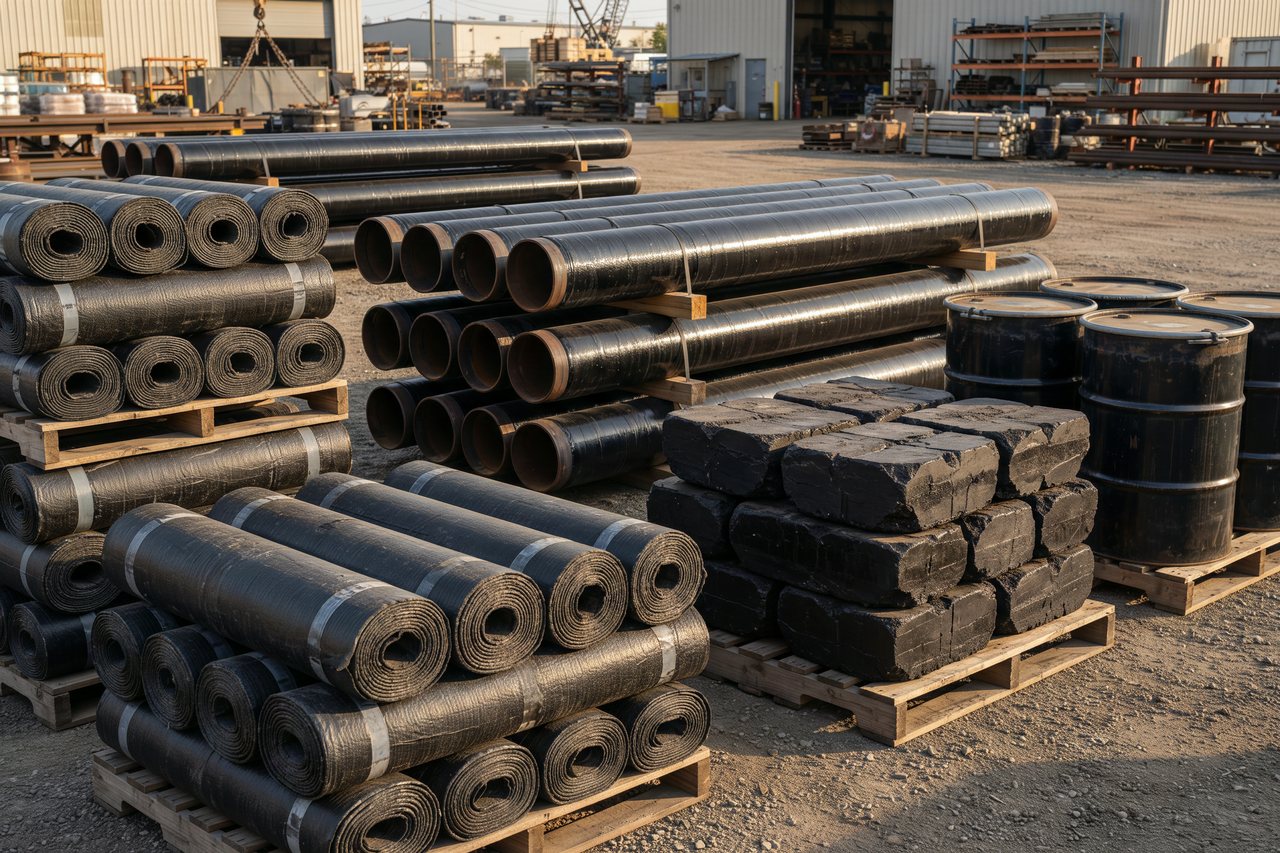
Oxidized Bitumen 115/15 and 90/15: Softening Point Engineering for Waterproofing, Roofing & Pipe Coating
Recent Posts
Practical chemical specifications, bulk packaging protocols, and commodity supply insights from Beroil Energy Group.
Technical Research
November 22, 2026
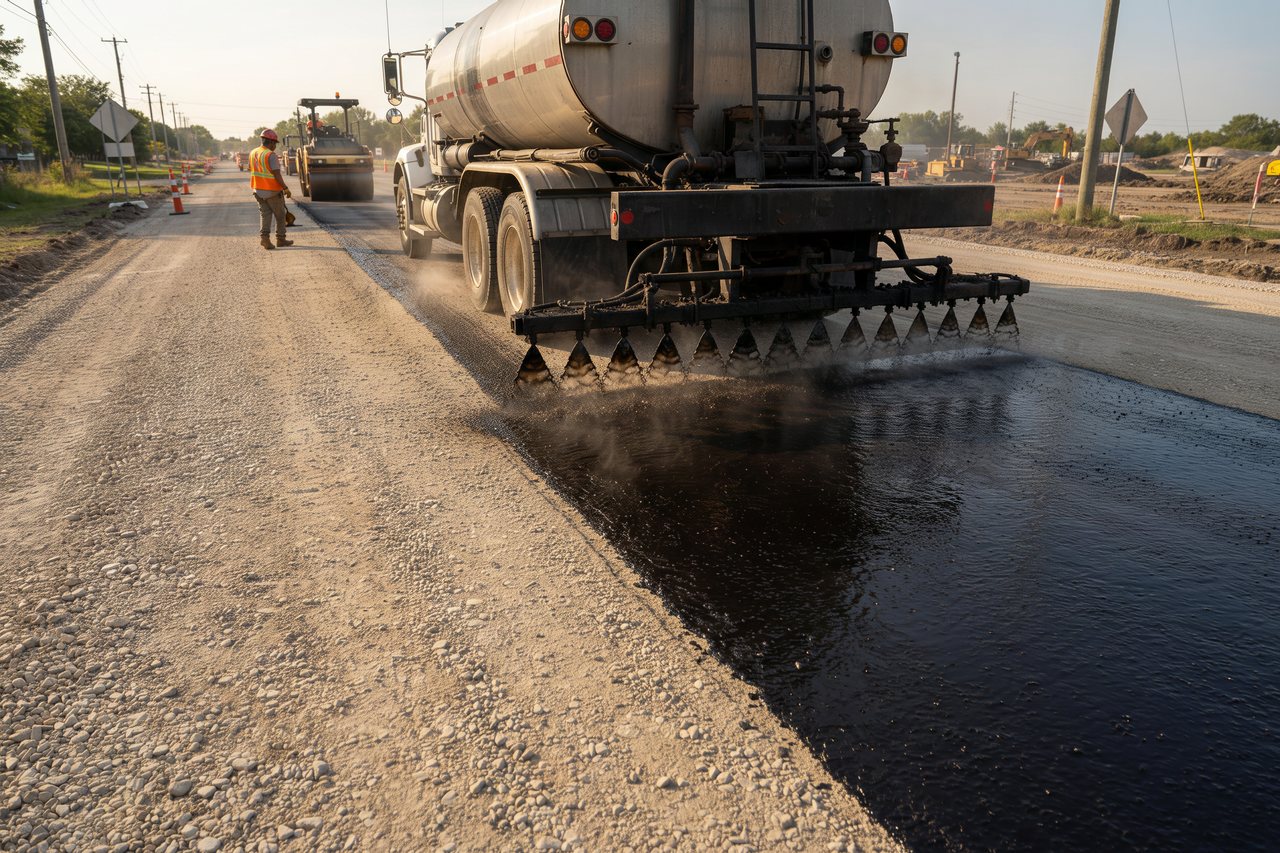
Cutback Bitumen MC-30 vs. MC-70: Prime Coat Selection, Curing Rates, and Sub-Base Penetration

Technical Research
November 22, 2026
Bitumen 60/70 vs. VG30 and VG40: Penetration vs. Viscosity Grading for Export Highway Projects

Packaging & Logistics
November 22, 2026