
Articles & Market Insights
Industrial Supply
November 22, 2026 · 11 min read
Granular vs. Lump vs. Powder Sulfur: Industrial Uses, Technical Specs & Commercial Export Guide
Beroil Trade Desk
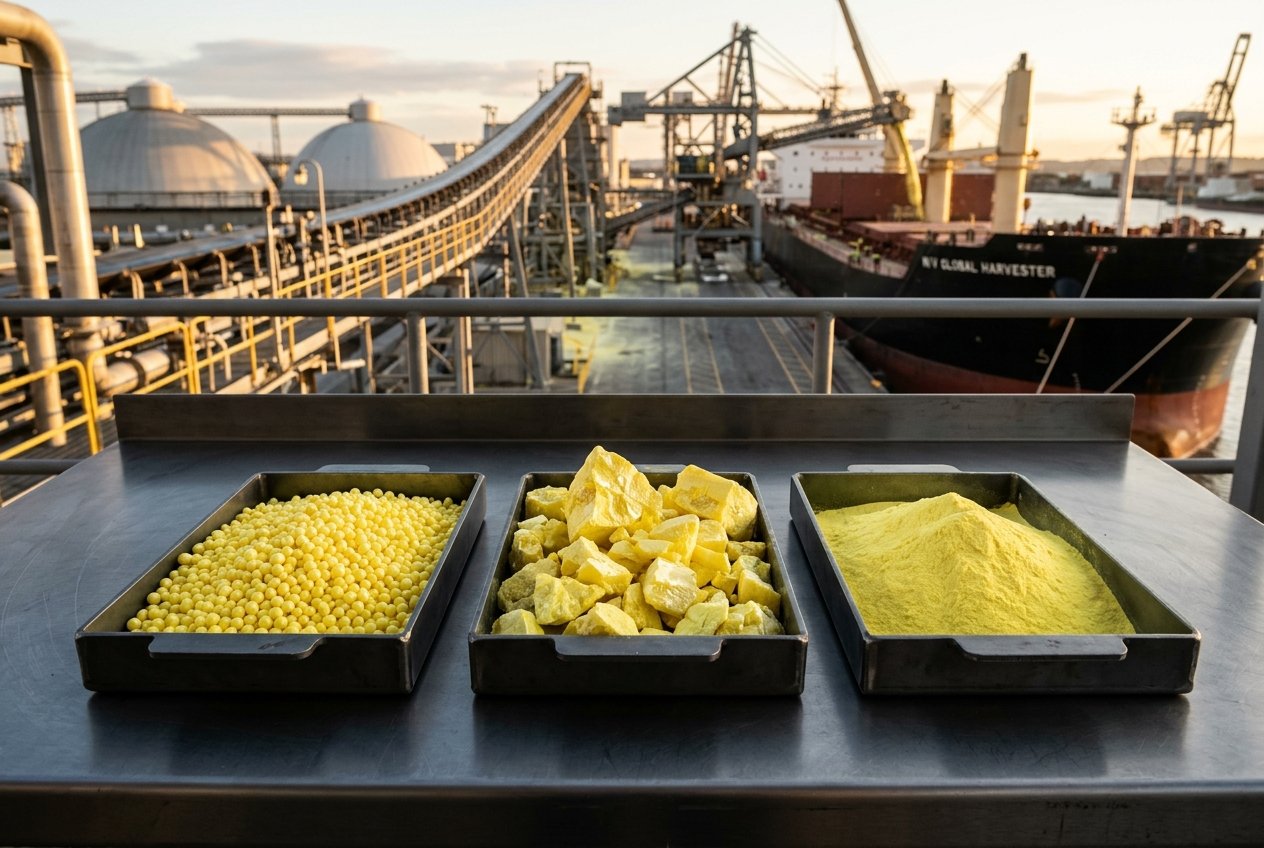
Although Granular Sulfur, Lump Sulfur, and Powder Sulfur all share identical chemical purity—99.50% to 99.95% elemental bright yellow sulfur recovered from gas sweetening and oil refining—their physical sizing completely governs handling safety, port clearance, melting efficiency, and final industrial application. Whether you procure 10,000 MT bulk cargoes for phosphate fertilizer plants or 100 MT containerized bags of 325-mesh powder for rubber compounding or crop protection, selecting the wrong solid form drives up freight cost, dust hazards, and plant downtime.
1. How Bright Yellow Refinery Sulfur Is Produced — Why Physical Form Matters More Than Purity
Over 95% of globally traded bright yellow elemental sulfur (99.5%–99.95% min) originates not from underground mines, but from sour natural gas processing and petroleum hydrodesulfurization. Acid gas (hydrogen sulfide, H2S) stripped during hydrocarbon purification passes through Claus Sulphur Recovery Units (SRU), condensing into clear, pale-yellow liquid sulfur at roughly 135°C–145°C before solidification.
Because every major Middle Eastern gas and refinery stream reaches essentially the same chemical purity (>= 99.50% dry basis, <= 0.05% ash, <= 0.01% acidity as H2SO4), international procurement specifications diverge primarily around how that molten sulfur is solidified—either formed into uniform spheres (granular/pastilles), poured and broken into irregular slabs (lump), or mechanically ground into fine dust (powder).
Downstream buyers span global sulfuric acid complexes, phosphate fertilizer producers working alongside Urea 46% nitrogen fertilizers, copper and nickel hydrometallurgy leach circuits, tire vulcanization plants, and commercial agrochemical blenders—each demanding strict particle-size geometry aligned to their feeding hoppers and melting vessels.
2. Granular Sulfur & Pastilles (2–6 mm): Dust Control, Bulk Vessels, and High-Efficiency Acid Plants
Granular Sulfur is produced in rotary drum granulators or fluidized-bed spray towers, where small seed particles are repeatedly coated with thin molten sulfur layers and cooled into dense, smooth 2–6 mm spheres (>= 90% in spec, fines < 0.5 mm capped at <= 1.0% max). A closely related cousin—Sulfur Pastilles (2–5 mm hemispherical beads)—solidifies via droplet deposition onto chilled stainless-steel belts.
For seaborne export above 500 MT and mechanized fertilizer ports, Granular Sulfur is the unquestioned commercial standard. Uniform spherical density eliminates fragile sharp edges, drastically reducing airborne sulfur dust generation during clamshell grabbing, belt conveying, and pneumatic unloading—minimizing port explosion hazards and municipal environmental penalties.
Inside sulfuric acid and DAP/MAP phosphate fertilizer melters, homogeneous 2–6 mm granules melt rapidly and predictably without bridging inside screw feeders or trapping air pockets, keeping burner throughput steady and filtering cycle fouling to a minimum.
3. Lump Sulfur vs. Milled Powder Sulfur (-40 to -325 Mesh): Melting Economy vs. Direct Reactivity
Lump Sulfur (typically 0–200 mm irregular chunks) is formed when molten refinery sulfur is poured onto open pouring vats or slates, allowed to freeze into massive yellow blocks, and broken mechanically by excavators or jaw crushers. Because it skips energy-intensive drum granulation, Lump Sulfur frequently carries a slight FOB discount ($5–$15/MT depending on terminal availability) and suits acid plants equipped with rugged hammer crushers, wide hopper chutes, and open steam-heated melters.
However, sharp edges on unscreened Lump Sulfur abrade into fine dust during multi-stage vessel handling and truck tipping—making bulk lump disfavored at strict environmental ports—though it remains widely traded in 1 MT jumbo bags or regional bulk for chemical manufacturing and Sulfur-Extended Asphalt (SEA) paving mixes.
Milled Sulfur Powder (-40 to -325 mesh, including 200-mesh and 325-mesh ultra-fine grades) sits at the opposite end of the value chain. Ground in nitrogen-blanketed hammer or roller mills from pure bright feedstock, fine powder maximizes reactive surface area for cold-blending applications—rubber tire vulcanization, crop fungicides, foliar dusting, soil alkalinity correction, and specialty industrial chemical feedstock synthesis—where slow-melting lumps simply will not disperse or dissolve.
4. Application Guide Across Agriculture, Mining, Rubber & Sulfuric Acid
Around 50%–60% of global elemental sulfur converts directly into sulfuric acid (H2SO4) to acidulate phosphate rock into phosphoric acid, DAP, MAP, and TSP fertilizers, as well as to leach oxidized copper, cobalt, and nickel ores. These continuous high-tonnage smelters almost universally prefer bright Granular or Screened Lump Sulfur because purity >= 99.5% with ultra-low organic carbon (<= 0.05%–0.10%) avoids foaming inside catalytic converters.
In rubber compounding and industrial manufacturing, 325-mesh oiled or insoluble sulfur powder is mandatory for uniform elastomer cross-linking during curing. Meanwhile, commercial farmers use both bentonite-compounded soil sulfur pastilles (90% S + 10% swelling clay) and wettable micronized 325-mesh powders to lower alkaline soil pH and supply fourth-macronutrient plant nutrition.
5. Commercial Export Guide: Packaging, Pricing Drivers, IMO UN 1350 & SGS Inspection
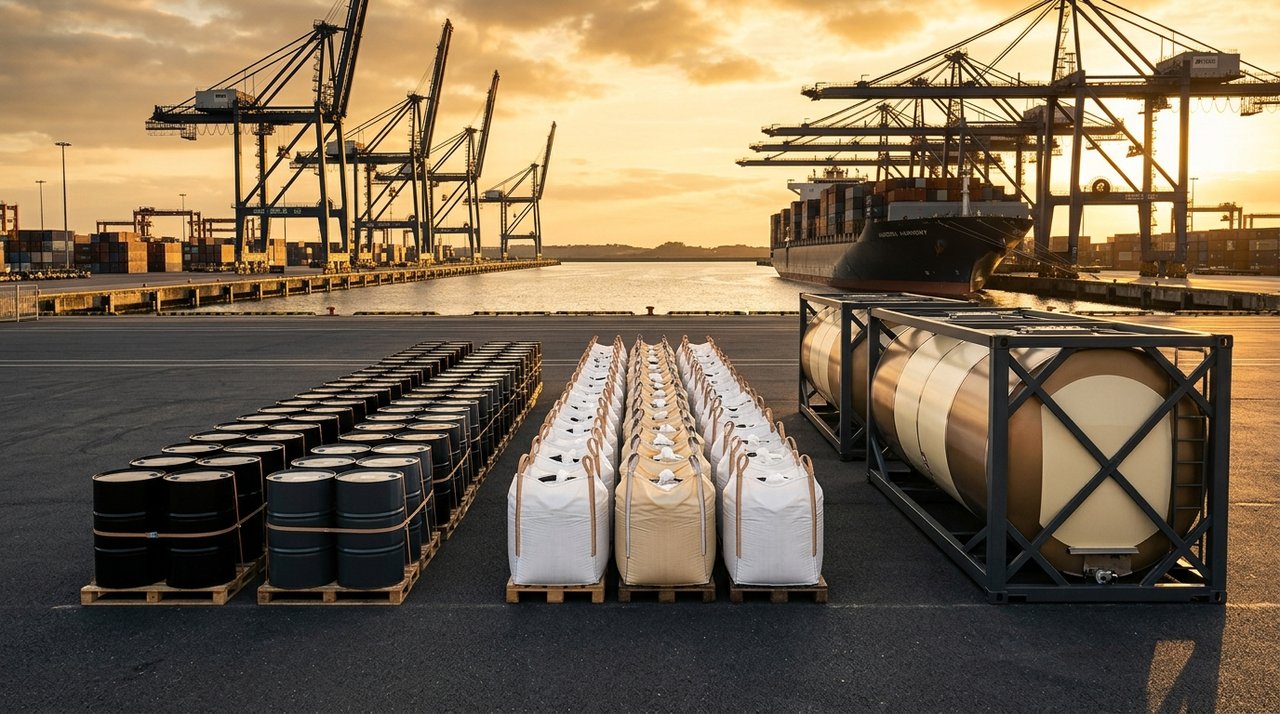
Commercially, packaging follows particle size and tonnage. Granular and Lump sulfur travel in bulk vessels (5,000–50,000 MT) or UV-stabilized 1 MT / 1.25 MT FIBC jumbo bags stuffed into 20 ft containers (typically 20–24 MT per 20’FCL, MOQ 200–500 MT). Fine milled Sulfur Powder (MOQ 100 MT) ships inside moisture-barrier lined 25 kg or 50 kg polypropylene woven bags—often palletized and shrink-wrapped—because shipping loose fine powder in open bulk violates dust explosion controls.
Crucial commercial detail for logistics managers: under IMDG maritime regulations, elemental sulfur (UN 1350) carries a Class 4.1 Flammable Solid classification (unless formed as smooth dust-free pastilles/prills tested to Special Provision 242 exemption), and free acidity <= 0.01% plus moisture <= 0.50% must be verified by SGS or Intertek COA at loading to prevent ship-hold hull corrosion. Explore our complete multi-commodity petrochemical catalog or contact our export quotation desk for current FOB Middle East and CFR ASWP spot/contract pricing.
Side-by-Side Comparison: Granular vs. Lump vs. Powder Sulfur
01.
1. Production & Particle Geometry
Granular / Pastilles are formed from molten SRU sulfur into 2–6 mm uniform spheres (>= 90% in range); Lump is poured and broken into 0–200 mm chunks; Powder is nitrogen-milled to -40 to -325 mesh fines.
02.
2. Primary Industrial Applications
Granular & Lump feed sulfuric acid plants, phosphate fertilizers (DAP/MAP), and metal leaching; Powder serves rubber vulcanization, fungicides, wettable crop sprays, and fine chemical synthesis.
03.
3. Dust Hazard & Handling Performance
Granular minimizes airborne dust (fines < 0.5 mm <= 1.0%) for automated port conveyors; Lump generates dust during drops/crushing; Powder (~190°C ignition) requires grounded explosion-safe bag dumping.
04.
4. Export Packaging & Minimum Orders
Granular (MOQ 500 MT) and Lump (MOQ 200 MT) ship in bulk vessels or 1 MT jumbo bags (20–24 MT/20’FCL); Sulfur Powder (MOQ 100 MT) ships exclusively in lined 25 kg or 50 kg PP bags.
05.
5. Key COA & Freight Benchmarks
All export grades demand 99.50%–99.95% dry purity, <= 0.50% moisture, <= 0.05% ash, and <= 0.01% H2SO4 acidity under SGS inspection, paired with UN 1350 Class 4.1 vessel clearance checks.
Sulfur Export Specifications & Related Petrochemical Resources
Access direct product datasheets and multi-commodity supply desks across Beroil Energy Group:
- Granular, Lump & Powder Sulfur Grade Datasheets: Inspect full 99.5%–99.95% technical specs, mesh sizes, packaging formats, and FOB/CFR shipping terms.
- Urea 46% Granular & Prilled Export Supply: Combine elemental sulfur procurement with granular Urea 46% for integrated fertilizer blenders.
- Bitumen 60/70, VG30 & Industrial Paving Supply: Evaluate virgin penetration binders alongside Sulfur-Extended Asphalt (SEA) road projects.
- Complete Industrial & Petrochemical Catalog: Review Caustic Soda Flakes 99%, Soda Ash Light/Dense, and Sodium Bicarbonate for vessel consolidation.
- Request Live FOB / CFR Sulfur Quotation: Submit destination port, required form (granular/lump/mesh powder), and tonnage for firm pricing.
Frequently Asked Questions
What is the practical difference between Granular Sulfur, Lump Sulfur, and Powder Sulfur?
All three share 99.50%–99.95% elemental sulfur purity, but differ in particle size and handling: Granular (2–6 mm spheres) flows cleanly with < 1% dust for bulk acid and fertilizer ports; Lump (0–200 mm chunks) is lower-cost raw broken block for plants with mechanical crushers; Powder (-40 to -325 mesh) is micronized dust for rubber vulcanization, agricultural spraying, and direct chemical reaction.
Why do large sulfuric acid and fertilizer ports insist on Granular Sulfur instead of Lump Sulfur?
Automated ship loaders, grab cranes, and belt conveyors generate heavy clouds of explosive, irritating sulfur dust when handling sharp-edged Lump Sulfur. Dense 2–6 mm Granular Sulfur resists breakage, meets strict port dust-emission limits, and feeds screw conveyors steadily without bridging.
What purity and impurity limits matter most on a Sulfur COA?
International contracts typically mandate >= 99.50%–99.95% sulfur content on a dry basis, moisture <= 0.50% max, ash <= 0.05% max, organic carbon <= 0.05%–0.10% max (to prevent sulfuric acid catalyst poisoning and dark foaming), and free acidity as H2SO4 <= 0.01% max to avoid steel ship-hold corrosion.
Is elemental sulfur regulated as hazardous cargo (IMO / IMDG) for sea freight?
Lump and powdered elemental sulfur fall under IMDG Code Class 4.1 Flammable Solids (UN 1350), requiring certified dangerous goods declarations and ignition-free stowage. Formed granular/prilled sulfur that passes IMDG Special Provision 242 friability/dust exemption tests often ships more smoothly across general cargo terminals.
How much sulfur fits in a 20ft container vs. bulk vessel from Beroil Energy?
Containerized exports pack 20 to 24 MT inside a 20ft FCL using 1 MT jumbo bags (for granular/lump) or 25 kg / 50 kg PP bags (for powder), with MOQs starting at 100 MT for powder, 200 MT for lump, and 500 MT+ up to multi-thousand-ton bulk vessels for granular sulfur.
Category
Latest Posts

Product Science
November 22, 2026
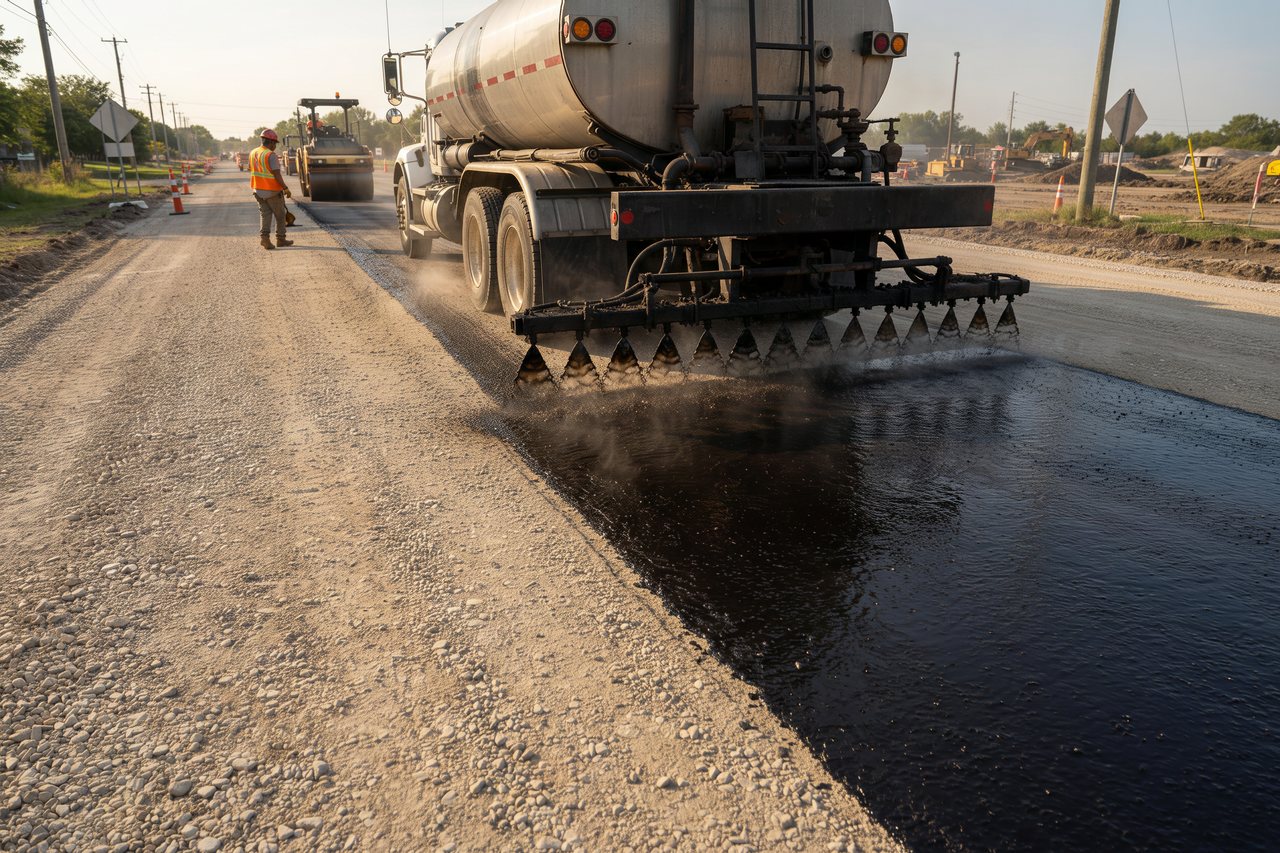
Polymer Modified Bitumen (PMB) & Bitumen Emulsions (CRS-2, CSS-1): Heavy-Axle & Cold Paving Engineering
Global Markets
November 22, 2026
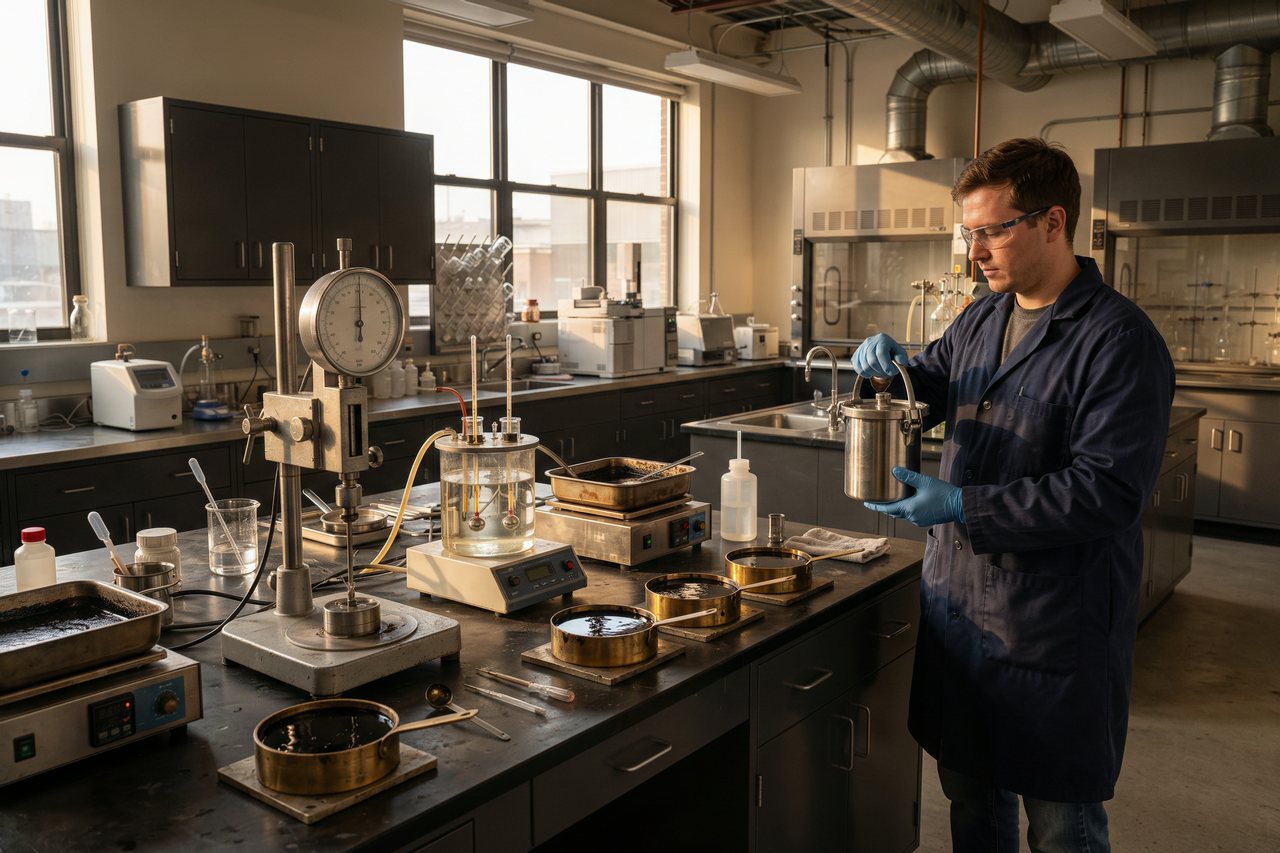
How to Audit a Bitumen COA & SGS Report: ASTM D5, D36, Spot Test & B2B Export Procurement Checklist
Industrial Supply
November 22, 2026
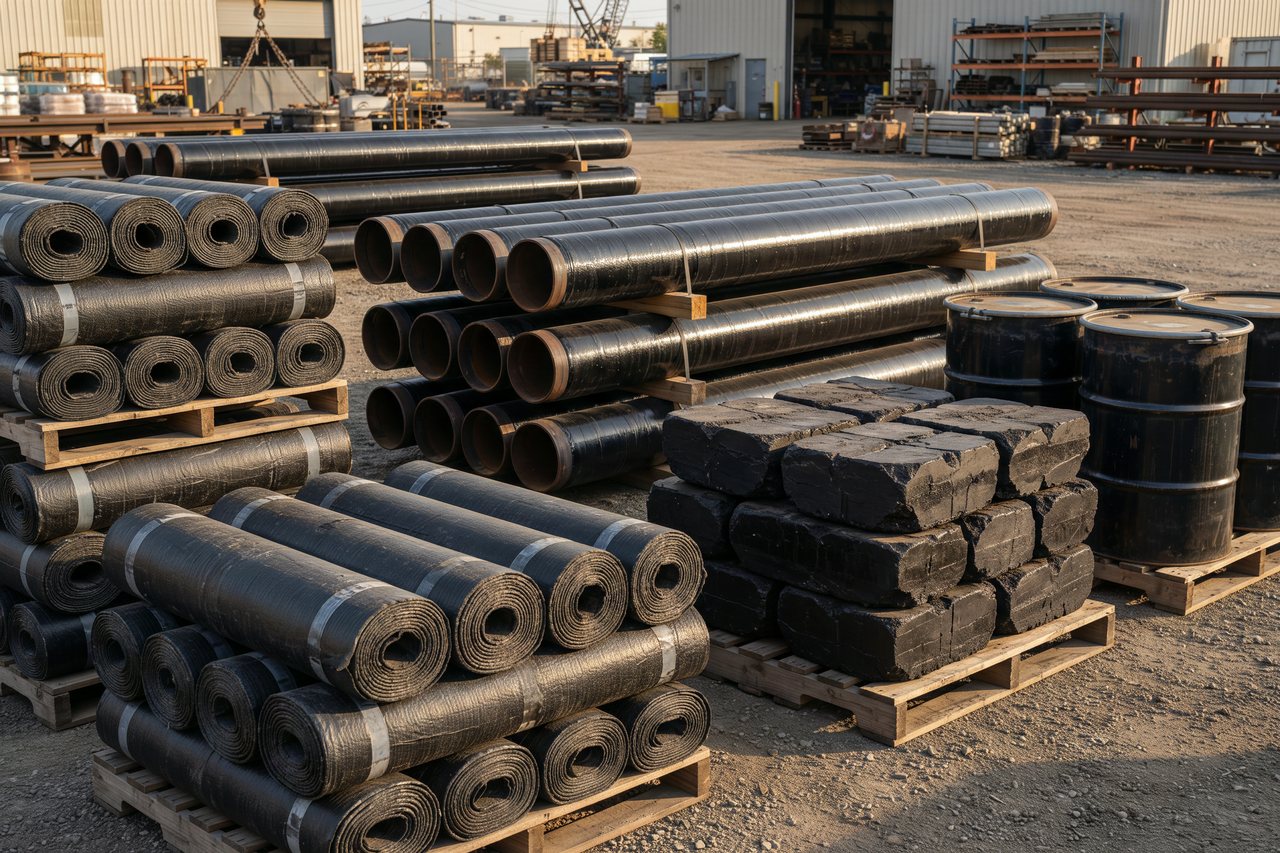
Oxidized Bitumen 115/15 and 90/15: Softening Point Engineering for Waterproofing, Roofing & Pipe Coating
Recent Posts
Practical chemical specifications, bulk packaging protocols, and commodity supply insights from Beroil Energy Group.
Technical Research
November 22, 2026
Cutback Bitumen MC-30 vs. MC-70: Prime Coat Selection, Curing Rates, and Sub-Base Penetration

Technical Research
November 22, 2026
Bitumen 60/70 vs. VG30 and VG40: Penetration vs. Viscosity Grading for Export Highway Projects
Packaging & Logistics
November 22, 2026