
Language
LanguageEnglish
Industrial Supply
November 26, 2026 · 12 min read
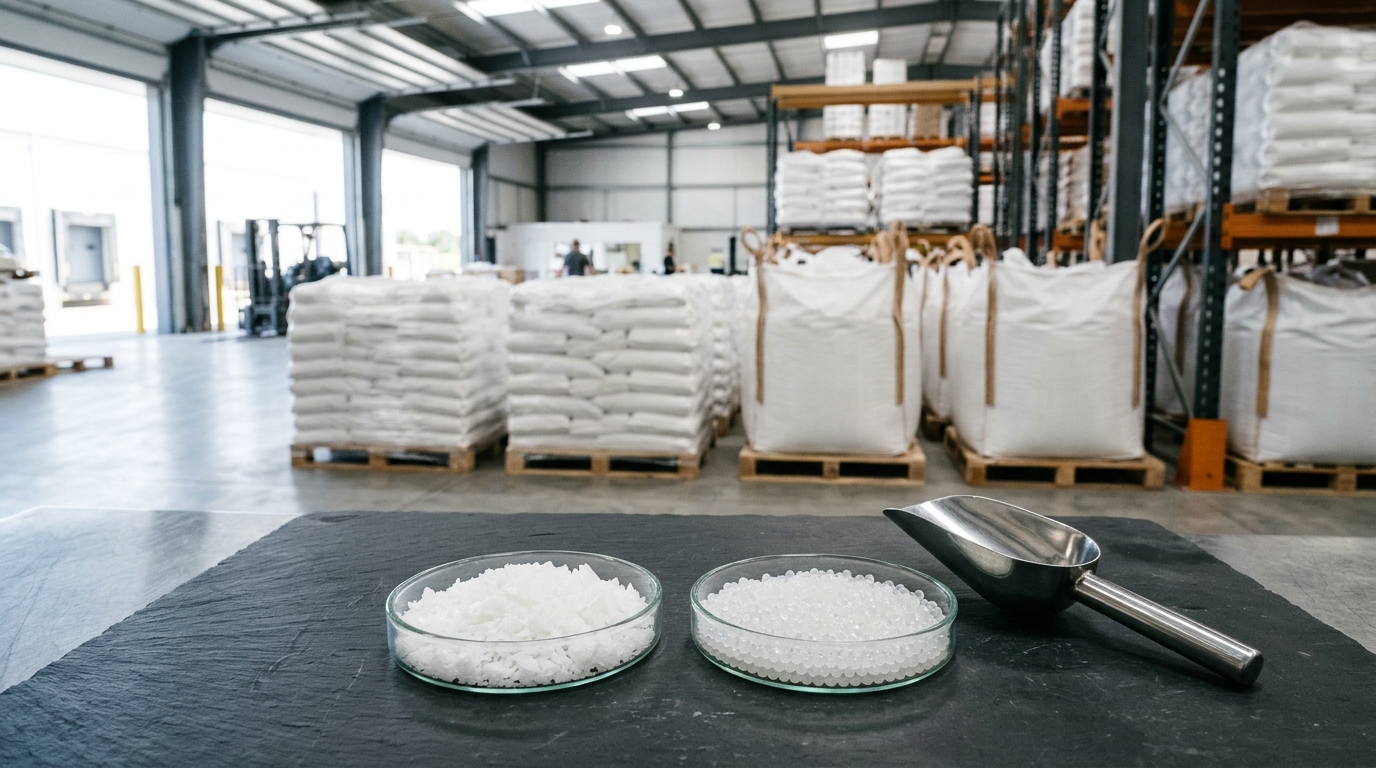
Sodium Hydroxide (NaOH)—traded commercially as Caustic Soda—drives more than 40% of global inorganic chemical volume across pulp bleaching, Bayer-process alumina refining, textile mercerization, soap saponification, water treatment, and hydrocarbon sweetening. Yet choosing between 99% Membrane-Cell Flakes, 99% Microprill Pearls, and 50% Liquid Solution requires balancing freight economics, UN 1823/1824 Class 8 dangerous-goods logistics, atmospheric deliquescence, and winter crystallization risks.
All commercial Caustic Soda Flakes, Pearls, and 50% Liquid grades derive from chlor-alkali electrolysis of saturated sodium chloride brine, which yields roughly 2.25 MT of 50% NaOH solution alongside 1 MT of chlorine gas and hydrogen—defining the industry’s fundamental Electrochemical Unit (ECU). However, electrolysis cell technology sets critical salt and metal contamination limits that directly impact soap clarity, rayon spinning, and stainless-steel corrosion.
Legacy Diaphragm-cell plants leave elevated residual sodium chloride (often 1.0%–1.5% NaCl) in finished alkali unless extensively purified, whereas aging Mercury-cell units have been systematically dismantled worldwide for environmental compliance. Modern Membrane-Cell electrolysis produces premium commercial Caustic Soda hitting >= 99.0% NaOH (solid basis) with ultra-low chlorides (<= 0.05% NaCl), sodium carbonate <= 0.50%, sodium sulfate <= 0.03%, and iron Fe2O3 <= 0.005% (and <= 0.002% in 50% liquid)—delivering a clean 1% aqueous pH of 13–14.
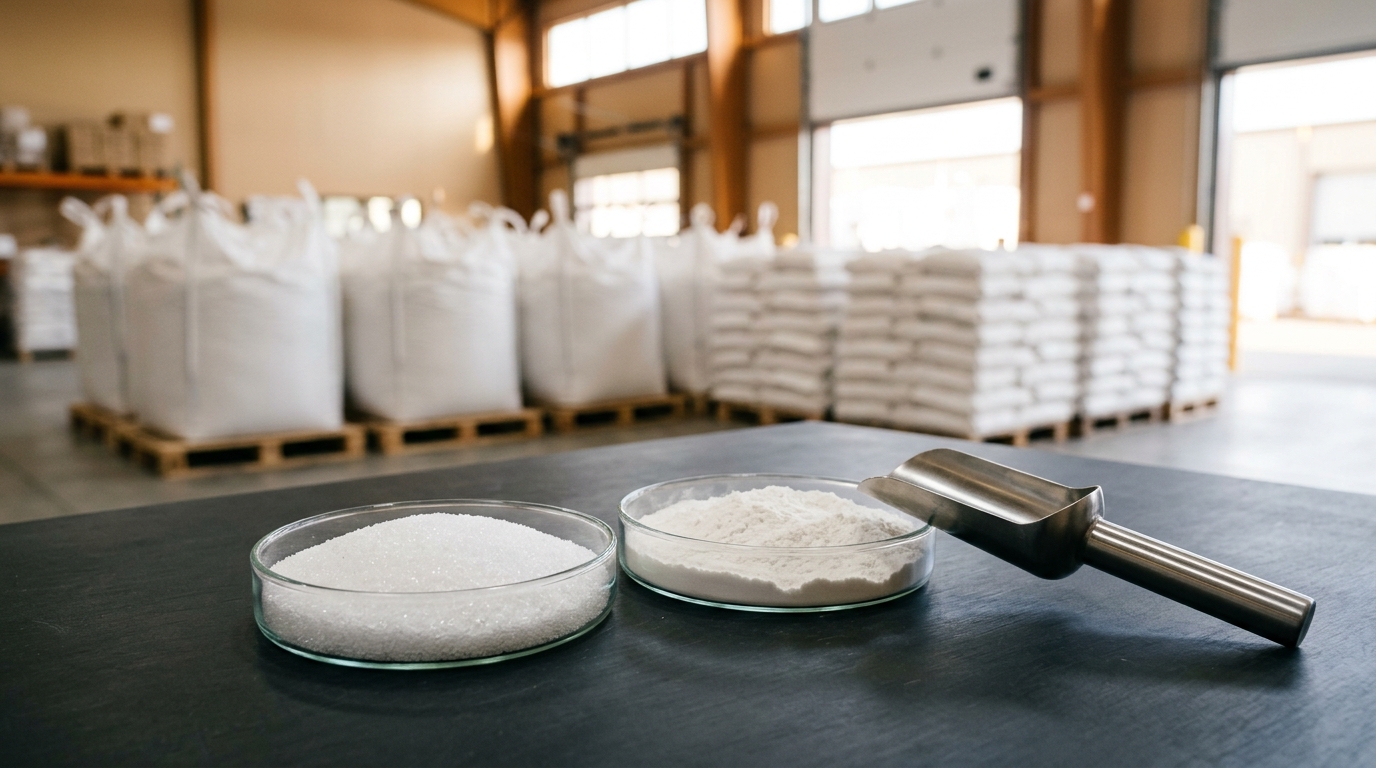
Purchasing managers tracking daily chlor-alkali spreads on live Caustic Soda pricing benchmarks also evaluate industrial Soda Ash (Na2CO3 99.2%) when buffering mild alkalinity processes where extreme hydroxide basicity (pH 14) is unnecessary.
Caustic Soda Flakes 99% (solidified from molten anhydrous NaOH on chilled flaking drums under HS 2815.11) dominate international container trade because shipping anhydrous solid eliminates paying ocean freight on 50% water. Flat irregular flakes compact efficiently on pallets, cost less per ton than spray-prilled pearls, and dissolve reliably with mechanical agitation in soap kettles, textile dye-houses, and refinery wash units. Caustic Soda Pearls 99% (0.5–1.2 mm uniform spheres formed in prilling towers) share the exact same 99.0% NaOH purity but offer near-zero fine dust and superior flowability without hopper bridging—making pearls ideal for automated screw feeders and precision dry-blend cleaners.
Caustic Soda 50% Liquid Solution (HS 2815.12, 49.5%–50.5% NaOH wt, specific gravity 1.52–1.53 g/cm3 at 20°C) skips on-site dissolution reactors altogether for continuous pipeline dosing at pulp mills, Bayer alumina plants, and municipal water utilities. Crucial cold-climate warning: 50% liquid NaOH begins crystallizing around 12°C (54°F), turning unheated ISO tanks or barges into solid slush in winter corridors unless steam-jacketed or insulated. Storage tanks and piping must also use 316L stainless steel, rubber-lined steel, epoxy-coated steel, or FRP—never aluminum, zinc, galvanized iron, or tin, which corrode rapidly while releasing explosive hydrogen gas.
Process safety reminder: both dissolving solid flakes/pearls and diluting 50% liquid generate intense exothermic heat—operators must always meter solid caustic slowly into cool circulating water (never pour water onto dry NaOH). If your end use relies on gentler carbonate alkalinity without Class 8 corrosion hazards, review our Dense vs. Light Soda Ash technical comparison before locking specifications.
Anhydrous Sodium Hydroxide is aggressively hygroscopic and deliquescent: left exposed to marine air, flakes rapidly pull moisture until liquefying into corrosive puddles while absorbing atmospheric CO2 to form brittle Na2CO3 crusts that inflate carbonate impurity above contract limits. Export logistics therefore require heavy-duty 25 kg or 50 kg woven polypropylene bags fitted with double-sealed inner polyethylene (PE) moisture liners, stacked cleanly inside 20 ft dry containers (24–25 MT typical FCL payload) or palletized and stretch-wrapped for forklift offloading, as well as UN-certified 1,000 kg FIBC jumbo sling bags for mechanized bag-dumping stations.
Through Beroil Energy Group’s IMDG-compliant Caustic Soda export program (starting at 100 MT MOQ), buyers receive UN-marked moisture-barrier packaging across 25 kg/50 kg bags, 1 MT FIBC jumbo bags, and 1,000 L IBC totes or ISO tanks for 50% solution. For warehouse operators managing multi-alkali inventories under humid port climates, combining sealed PE-liner rotation with our alkali moisture-control warehousing practices protects shelf flowability for 12+ months.
Every import batch should be verified at load port under ASTM E291 titrimetric testing (or ISO equivalent) plus spectrophotometric iron check: confirm NaOH >= 99.0% (or 98.5%–99.0% contract tolerance on flakes), Na2CO3 <= 0.50% max (spikes above 0.8% prove poor sealing or damp factory storage), NaCl <= 0.05% max (proving Membrane-Cell origin over Diaphragm), Fe2O3 <= 0.005% max (critical for white soap bars and bright textiles), and insoluble matter <= 0.05% max.
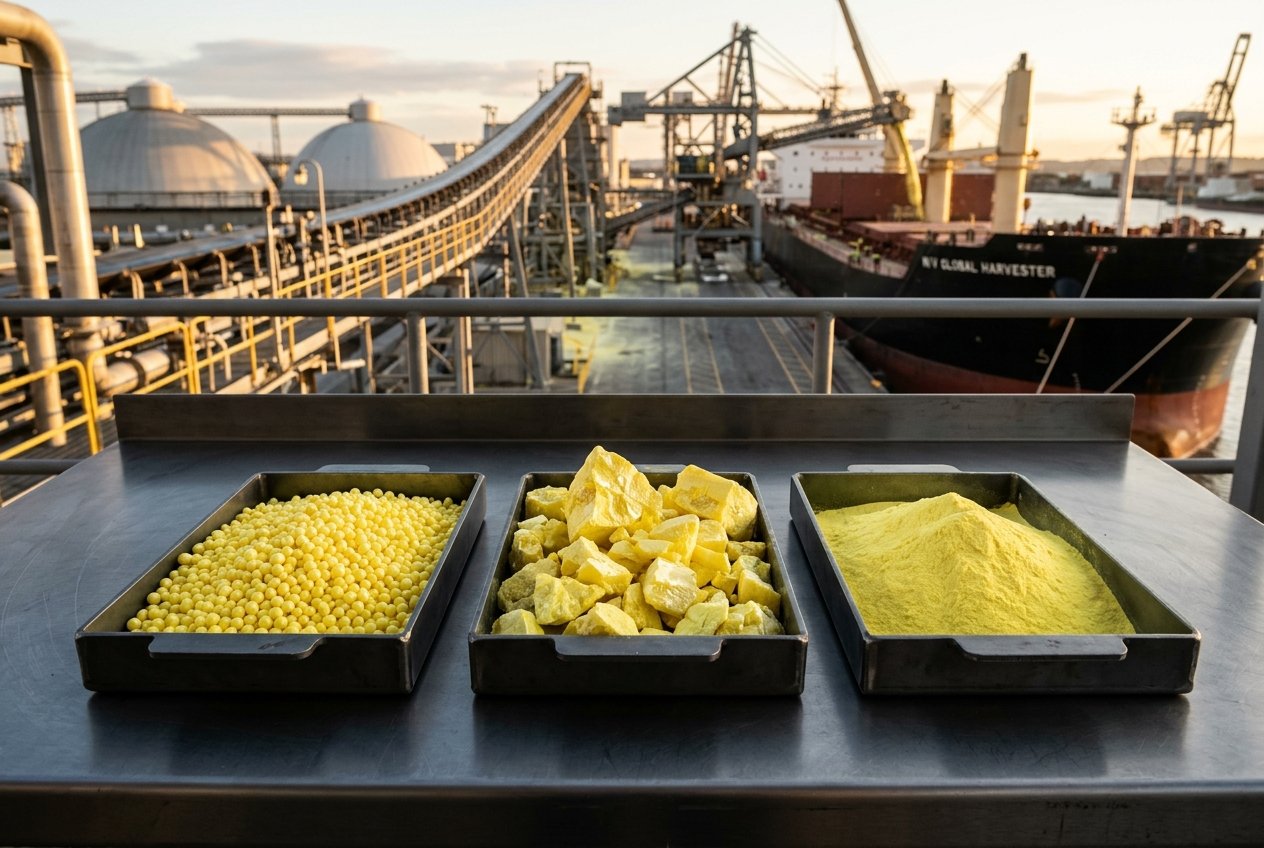
On ocean freight, never budget standard general-cargo container rates: Solid Flakes and Pearls carry mandatory IMDG Code Class 8 Corrosive classification (UN 1823, Packing Group II, CAS 1310-73-2), while 50% Liquid ships as UN 1824 Class 8 PG II—just as logistics teams plan IMDG Class 4.1 rules for granular and lump Sulfur (UN 1350). Carriers require certified UN packaging, Class 8 corrosive placards, GHS05 SDS sheets, and signed Multimodal Dangerous Goods Declarations (DGD), plus independent SGS or Intertek composite manifold sampling before sealing containers across our verified petrochemical export catalog.
Because chlorine and caustic soda co-emerge in fixed stoichiometry during brine electrolysis, Caustic Soda prices move inversely with PVC and construction chlorine demand: when housing and PVC resin slow down, chlor-alkali plants cut utilization, tightening caustic inventories and lifting spot FOB export values even when industrial energy tariffs hold steady. Conversely, tight container space and Class 8 carrier surcharges drive sharp FOB-to-CFR differentials on Red Sea, East/West Africa, and South America corridors.
Procurement managers can hedge volatility by checking daily regional parity on our Caustic Soda Market Intelligence terminal, pairing multi-commodity alkali shipments through our industrial chemicals catalog, and requesting firm port-specific CFR quotes with Class 8 DG freight breakdown via our export quotation desk—specifying grade (Flakes 99%, Pearls, or 50% Liquid), bag/tank format, tonnage, and discharge port.
Flakes and Pearls (HS 2815.11) ship at >= 99.0% NaOH, <= 0.50% Na2CO3, and <= 0.05% NaCl; 50% Liquid (HS 2815.12) tests 49.5%–50.5% NaOH with specific gravity 1.52–1.53 g/cm3.
Pearls (0.5–1.2 mm beads) deliver free-flowing automated dosing with near-zero dust; Flakes offer lowest solid cost for dissolution; 50% Liquid crystallizes near 12°C in cold ports.
All commercial forms fall under IMDG Class 8 Corrosive, Packing Group II—UN 1823 for solid Flakes/Pearls and UN 1824 for 50% Liquid—requiring UN packaging, GHS05 SDS, and DGD.
Solid grades pack 24–25 MT/20ft FCL in PE-lined 25/50 kg PP bags (loose or palletized) or 1 MT UN FIBC bags; 50% Liquid uses 1,000 L IBC totes, 250 kg drums, or ISO tanks (MOQ 100 MT).
Use 316L stainless steel, rubber/epoxy-lined steel, or FRP; strictly avoid aluminum, zinc, galvanized steel, or tin due to rapid corrosion and flammable hydrogen gas release.
Access technical datasheets, IMDG export compliance terms, and live chlor-alkali benchmarks across Beroil Energy Group:
Chemically both deliver >= 99.0% NaOH from Membrane-Cell electrolysis, but Flakes are flat broken sheets (lower cost per MT for standard wet dissolution in soap, textile, and water plants), whereas Pearls are 0.5–1.2 mm spherical microprills that flow cleanly with near-zero dust in automated hoppers and dry cleaning blends.
Membrane-Cell production holds residual sodium chloride (NaCl) at <= 0.05% max and iron (Fe2O3) at <= 0.005%, whereas Diaphragm-Cell caustic commonly carries 1.0%–1.5% NaCl—preventing salt buildup, stainless-steel chloride pitting, and discoloration in soap, rayon, and chemical processes.
Solid Caustic Soda Flakes and Pearls fall under UN 1823, Class 8 Corrosive, Packing Group II, and 50% Aqueous Caustic Soda falls under UN 1824, Class 8, Packing Group II. Export shipments require UN-certified PP/PE or FIBC packaging, Class 8 placards, GHS05 SDS documentation, and Dangerous Goods Declarations.
A 50% NaOH aqueous solution begins crystallizing around 12°C (54°F). When importing 50% liquid via ISO tanks or bulk tankers into temperate or winter ports, heated/insulated tanks are required to prevent solidification—otherwise 99% solid Flakes or Pearls provide much lower freight and storage cost.
Beroil Energy Group supplies Membrane-Cell Caustic Soda Flakes 99%, Pearls 99%, and 50% Liquid starting from a 100 MT minimum order in PE-lined 25 kg or 50 kg PP bags (loose or shrink-wrapped on pallets), 1 MT UN FIBC jumbo bags, or IBC/ISO tanks under full SGS inspection and IMDG Class 8 compliance.
Industrial Supply
November 26, 2026
Industrial Supply
November 22, 2026

Product Science
November 22, 2026
Practical chemical specifications, bulk packaging protocols, and commodity supply insights from Beroil Energy Group.
Global Markets
November 22, 2026
Industrial Supply
November 22, 2026
Technical Research
November 22, 2026